“Why does my face look different from the side?”
It is a question people sometimes ask after seeing an unexpected photograph.
From the front, their features feel familiar. From the side, they notice that the chin appears farther back than expected—or projects more strongly than they realised.
The first instinct may be to focus on the nose.
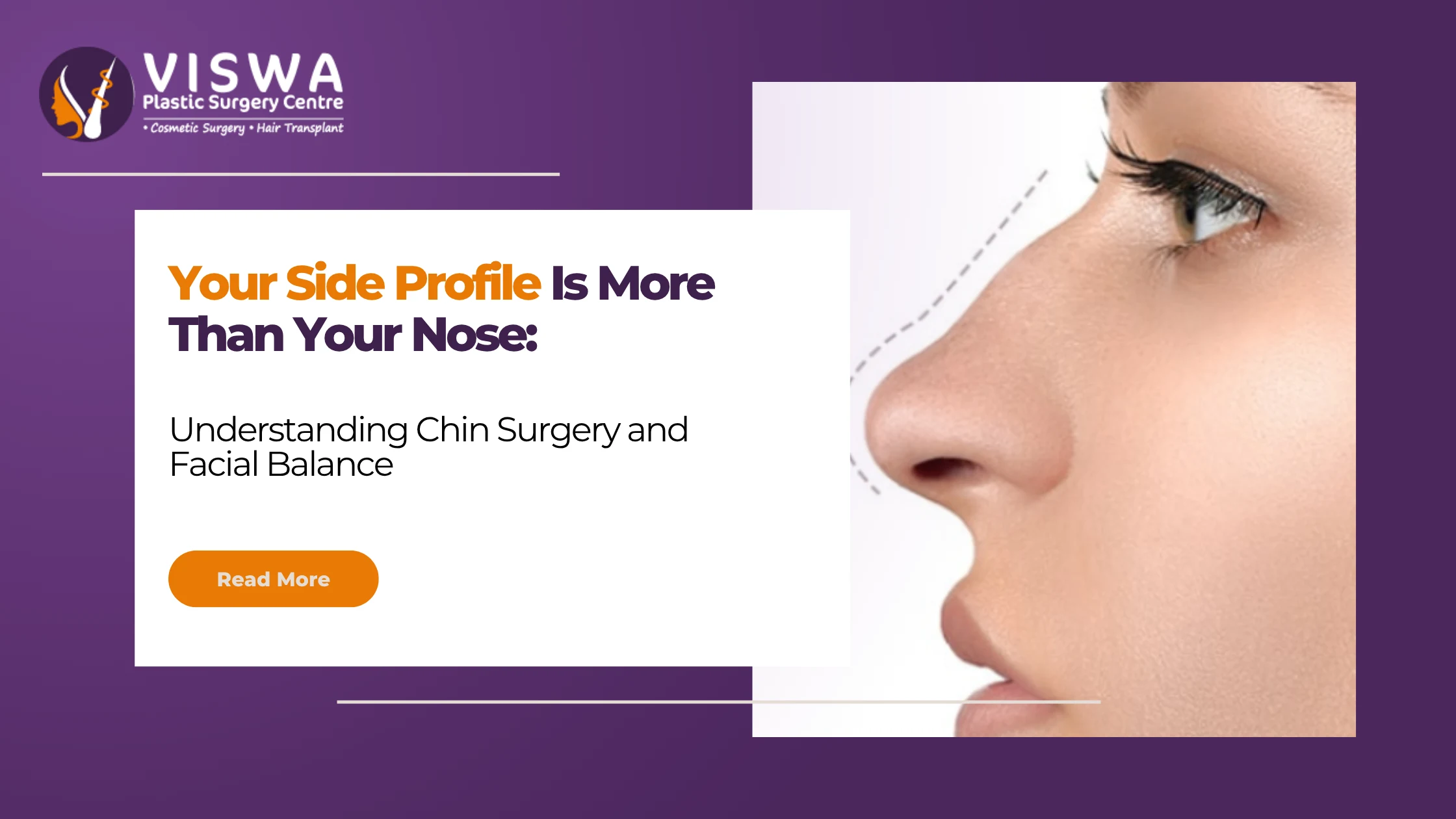
But a facial profile is not one feature viewed in isolation. The forehead, nose, lips, chin and neck contribute to how the face appears as a whole.
Chin surgery may be considered when the chin’s shape or position is the main concern. Before discussing a procedure, however, it is important to understand whether the issue involves the chin alone or the wider jaw structure.
How Does the Chin Affect Facial Balance?
The chin forms an important part of the lower facial profile.
A chin with limited forward projection can change how prominent other features appear. A strongly projecting chin can also influence the overall impression of the face.
This relationship is one reason surgeons assess the entire profile rather than simply measuring the feature a patient initially points to.
It does not mean there is one ideal chin shape everyone should have. Individual features should be considered together.
What Is Genioplasty?
Genioplasty is surgery that changes the shape or position of the chin.
Depending on the concern, treatment may involve adding projection with an implant, repositioning the chin bone or reducing a prominent bony contour.
These approaches are not interchangeable. Each has different capabilities, limitations and surgical considerations.
Viswa’s chin surgery service page lists augmentation through implants or bony advancement, reduction and corrective procedures.
The appropriate method must be determined through examination—not selected solely from photographs or a preference for the least invasive-sounding option.
Why Might Someone Have a Receding or Prominent Chin?
People naturally differ in facial bone structure and proportions.
For some, the chin has always appeared relatively small or prominent. Others may seek assessment because of asymmetry, an injury or concerns after previous surgery.
A chin that appears to sit farther back does not automatically establish a jaw disorder. Equally, it should not be assumed to be a purely cosmetic issue.
The consultation needs to identify which structures are involved and whether the requested change is achievable through chin reshaping.
Chin Surgery and Jaw Surgery Are Not the Same
This distinction matters when someone also has concerns about how their teeth meet or how they chew.
Chin surgery primarily changes the chin. Jaw correction, also called orthognathic surgery, addresses the position or relationship of the jaws and may be considered for bite-related problems.
Changing the chin alone should not be presented as a solution for an underlying bite abnormality.
If the concern includes tooth alignment or jaw function, an appropriate dental or maxillofacial assessment may be needed before a cosmetic plan is finalised.
This is not an argument for more surgery. It is a reason to identify the concern correctly.
Chin Implant or Bone Repositioning?
A chin implant can add projection and contour in selected patients. Bone-based genioplasty changes the position or shape of the patient’s own chin bone.
The choice depends on the movement required, existing anatomy and surgical goals.
An implant is not automatically the better option because it avoids moving bone. Bone repositioning is not automatically preferable because it uses existing tissue.
Ask what each approach would achieve in your particular case and what limitations would remain.
| Approach | Main purpose |
| Chin implant | Adds projection or contour to a selected chin |
| Bone-based genioplasty | Repositions or reshapes the chin bone |
| Chin reduction | Reduces a prominent bony chin contour |
| Jaw correction | Addresses broader jaw-position or bite concerns |
These are general distinctions—not a way to diagnose yourself or choose surgery without assessment.
What About Non-Surgical Options?
Temporary chin augmentation with injectable filler may be discussed in selected circumstances.
However, filler does not reposition bone or correct a jaw relationship. It also has its own risks and should not be described as a risk-free trial of surgery.
Whether a non-surgical approach is appropriate depends on the concern, the degree of change desired and a qualified assessment.
Its discussion here is general medical information, not a statement that Viswa currently offers chin fillers.
Choosing no treatment is also an option.
What Happens During a Chin Surgery Consultation?
Bring a clear description of what concerns you.
“I want my chin to project a little more” is more useful than “I want a perfect jawline.” Mention whether the concern appears from the front, side or both.
The surgeon will review your medical history, previous procedures, medication and relevant lifestyle factors. Facial examination and photographs help support planning.
This is the time to discuss realistic changes, alternatives, risks and recovery—not simply confirm that an operation can be performed.
Reference photographs can help communicate preferences, but they should not become a promise to reproduce someone else’s face.
Who May Consider Chin Surgery?
A consultation may be appropriate for someone with a persistent, specific concern about chin projection, shape or proportion.
General health, nicotine use and expectations affect suitability.
The decision should be made for your own reasons rather than to satisfy another person or fit an online beauty standard.
If your preference changes with every new photograph or social-media trend, taking more time before deciding may be helpful. You do not need to turn a passing observation into a surgical decision.
What Risks and Limitations Should Be Discussed?
Potential risks include bleeding, infection, poor healing, asymmetry, persistent pain and changes in sensation.
Implant-based surgery carries additional considerations such as implant displacement and scar tissue around the implant. Unfavourable scars or an unsatisfactory appearance can occur, and revision surgery may be needed.
Ask how the proposed technique changes your particular risk profile.
Chin surgery also cannot guarantee complete symmetry, eliminate every contour concern or stop future age-related changes.
A technically possible change is not always an appropriate change.
What Is Recovery Like?
Recovery instructions depend on the procedure and incision location.
Dressings or supportive bandaging may be used. When an incision is inside the mouth, special mouth care and temporary dietary instructions may be required.
Swelling can affect the early profile, and healing continues after the first improvement in comfort.
Follow-up appointments allow the surgeon to assess progress and advise when activity can increase. Do not use another patient’s timeline as a substitute for your own instructions.
Plan around work, eating, exercise and any commitments where early swelling would matter.
Questions to Ask Before Deciding
- Is my concern mainly the chin or the wider jaw relationship?
- What change would be proportionate to my face?
- Why are you recommending an implant, bone surgery or reduction?
- Would further dental assessment be useful?
- Where would the incision be?
- What sensation changes are possible?
- What could remain unchanged?
- What happens if I decide not to proceed?
A useful consultation should make these distinctions clearer.
Conclusion: Understand the Profile Before Changing It
A side profile is a relationship between features—not a competition to create the strongest chin or smallest nose.
If you are considering chin surgery in Guntur, Dr. Viswanath Polineni at Viswa Plastic Surgery & Hair Transplant Centre can assess your concern and discuss suitable options.
You can request a consultation to explore what is realistic for your anatomy.
The starting point should be understanding your face—not correcting it to match someone else’s.
FAQs
1. Is genioplasty only used to make a chin bigger?
No. Chin surgery can involve augmentation, reduction or reshaping, depending on the concern.
2. Will chin surgery correct my bite?
Chin surgery alone is not intended to correct an underlying bite problem. Jaw and dental assessment may be needed.
3. Does a receding chin always require surgery?
No. Treatment is optional, and suitability depends on anatomy, goals and health.
4. Is a chin implant better than bone-based genioplasty?
Neither is universally better. They offer different ways of addressing selected concerns.
5. Will I have an external scar?
That depends on the incision location. Some incisions are inside the mouth; others are beneath the chin.
6. When will I see the final result?
Early swelling can obscure the contour. Your surgeon will explain the expected healing course for your procedure. Results should not be judged immediately after surgery.