Ramesh was convinced he had tried everything.
Hair oils.
Homemade remedies.
Onion juice.
Expensive shampoos.
Vitamin supplements.
For nearly seven years, he hoped the next product would finally stop his receding hairline.
It never did.
When he finally consulted a plastic surgeon, he learned something that completely changed his perspective.
Hair transplant doesn’t create new hair. It redistributes healthy hair follicles from one part of your scalp to another.
That simple understanding helped him make an informed decision instead of chasing marketing claims.
If you’re considering a hair transplant, understanding how it actually works is far more valuable than believing dramatic before-and-after advertisements.
Hair Loss Is Not the Same for Everyone
Not every person losing hair needs a hair transplant.
Hair loss has many causes, including:
- Genetic male pattern baldness
- Female pattern hair loss
- Hormonal changes
- Medical conditions
- Certain medications
- Nutritional deficiencies
- Stress-related shedding
- Scalp disorders
Some of these causes require medical treatment rather than surgery.
A proper evaluation helps identify the underlying reason before deciding on any procedure.
What Exactly Is a Hair Transplant?
A hair transplant is a surgical procedure that moves healthy hair follicles from a donor area—typically the back or sides of the scalp—to areas experiencing thinning or baldness.
The transplanted follicles continue to grow hair because they generally retain the characteristics of the donor area.
The goal is not simply to add hair but to create a natural hairline, balanced density, and long-term aesthetic harmony.
FUE vs FUT: What’s the Difference?
Two commonly used techniques are:
| Feature | FUE | FUT |
| Hair extraction | Individual follicles | Strip of scalp |
| Scarring | Tiny dot scars | Linear scar |
| Recovery | Usually quicker | May take slightly longer |
| Suitable for | Many patients | Selected cases |
The most appropriate technique depends on your hair characteristics, donor area, degree of hair loss, and surgeon’s assessment.
Who Is a Good Candidate?
You may be a suitable candidate if you:
- Have stable pattern hair loss
- Have sufficient donor hair
- Have realistic expectations
- Are in good general health
- Understand that surgery redistributes existing hair
People with ongoing medical hair loss conditions may first require medical management before surgery is considered.
The Biggest Myth: “Hair Transplant Gives Instant Results”
This expectation often leads to disappointment.
Hair transplantation is a gradual process.
Typically:
- Initial healing occurs within days to weeks.
- Transplanted hairs often shed before new growth begins.
- New growth develops gradually over several months.
- Final density continues to improve over time.
Patience is an important part of the treatment journey.
Does Transplanted Hair Fall Again?
This is one of the most searched questions.
Transplanted follicles are generally selected from areas that are more resistant to pattern baldness.
However:
- Existing non-transplanted hair may continue to thin with age.
- Individual outcomes vary.
- Long-term hair care and follow-up remain important.
Your surgeon may recommend ongoing medical treatment to help preserve existing hair.
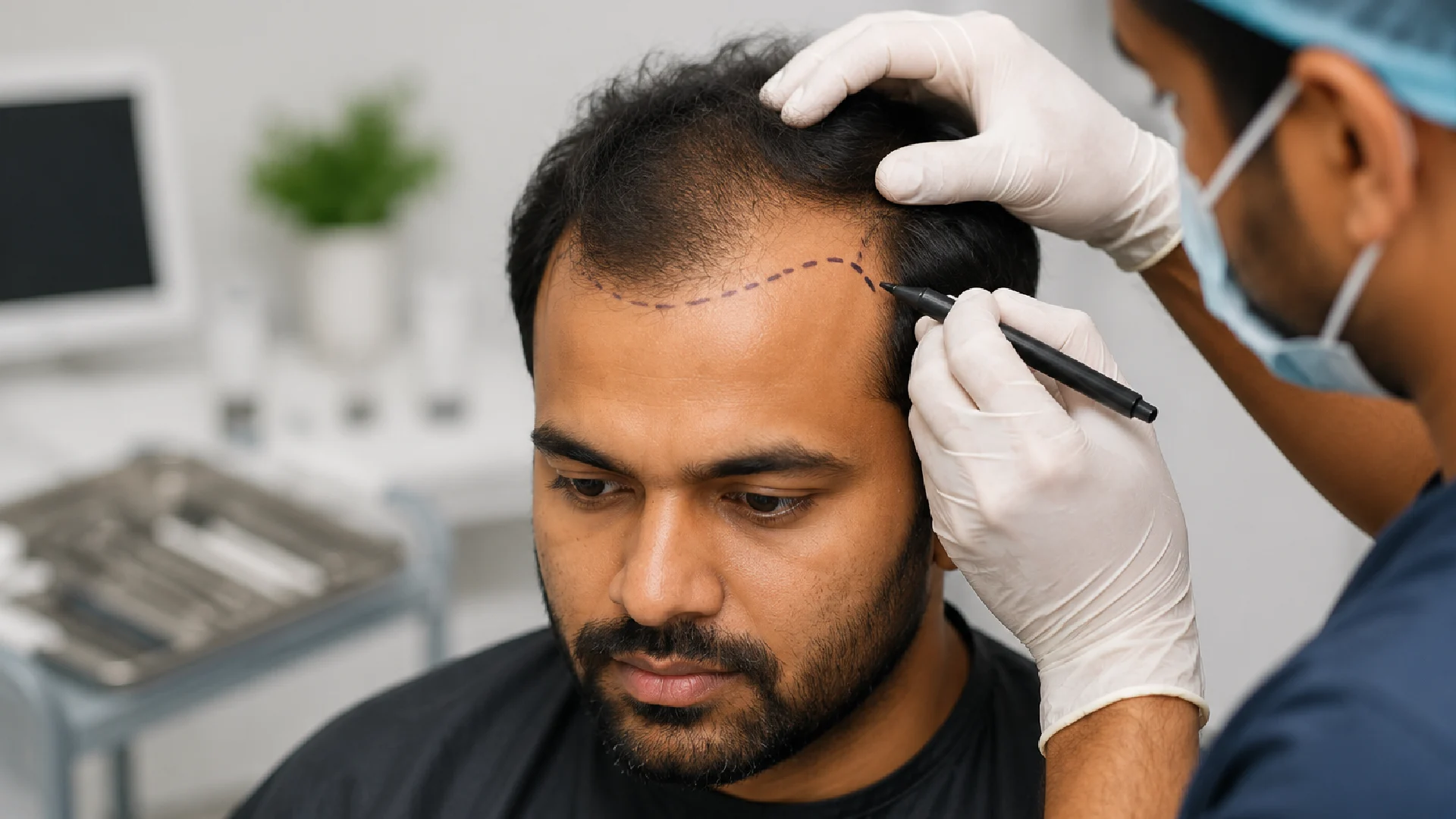
Hairline Design Is More Important Than Hair Count
Many people focus only on the number of grafts.
Experienced surgeons often focus first on designing a natural hairline.
An unnatural hairline may remain noticeable regardless of the number of grafts transplanted.
Factors considered include:
- Facial proportions
- Age
- Hair direction
- Hair density
- Future hair loss pattern
Hair transplantation is both a surgical and artistic procedure.
Recovery After Hair Transplant
Recovery varies between individuals, but commonly includes:
- Mild swelling
- Temporary redness
- Small crusts around transplanted follicles
- Gentle hair washing as advised
- Avoiding strenuous activity during the initial healing phase
Following post-operative instructions helps protect newly transplanted grafts.
Common Hair Transplant Myths
Myth 1: Hair transplant is only for older men.
False.
Eligibility depends on the pattern and stability of hair loss—not simply age.
Myth 2: Hair transplant looks fake.
Modern techniques aim to produce natural-looking results when planned and performed appropriately.
Myth 3: Hair transplant is extremely painful.
The procedure is generally performed under local anaesthesia, though recovery experiences differ between individuals.
Myth 4: Anyone with hair loss needs surgery.
Many forms of hair loss are managed medically without surgery.
A proper diagnosis comes first.
Choosing the Right Surgeon
Before deciding on a hair transplant, ask:
- What is causing my hair loss?
- Am I a suitable candidate?
- Which technique is recommended and why?
- How many grafts may be required?
- What results are realistic for my hair type?
The consultation should focus on your long-term outcome—not just the procedure itself.
Conclusion
Hair transplantation is not a miracle treatment, nor is it simply a cosmetic trend.
For the right candidate, it can restore hair in areas affected by pattern baldness while maintaining a natural appearance.
The first step is not booking surgery—it’s understanding the cause of your hair loss and exploring the most appropriate treatment options.
If you’re from Guntur, Amaravathi, Tenali, Mangalagiri, Chilakaluripet, Sattenapalli, Narasaraopet, or nearby areas, consulting an experienced plastic surgeon can help you understand whether a hair transplant is suitable for your specific situation.